Lucid dreaming is a state of becoming aware that you are dreaming while you are dreaming. Once you are conscious and self-aware during a dream, you are in the Phase.
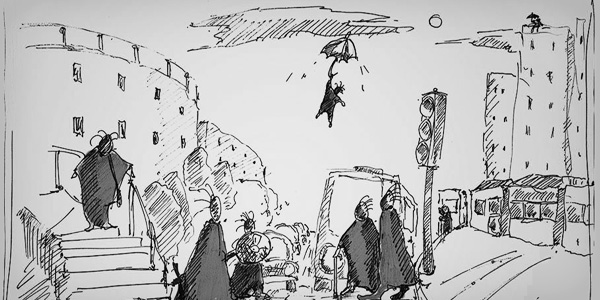
If you are sleeping and suddenly realize that you are dreaming, it is considered the Phase from this moment on.
The difference between the Phase and a regular dream is that, while the consciousness is always present in a dream to some extent, the consciousness in the Phase is as clear as when awake. Such complete consciousness is not possible as long as you follow the dream plot.
The distinctive feature of Lucid Dreaming is that, unlike in other methods, techniques are not performed right before the experience occurs. They are done separately to increase the chances of realization in a dream. This makes this method less controllable than others. On the bright side, if you practice other methods of entering the Phase regularly, there is almost 100% chance that you will experience lucid dreams as a side effect and one needs to know how to react when this happens.
As with other methods for entering the Phase, the best way to become conscious while dreaming is to use the deferred approach. It is also easy to become aware in a dream during a daytime nap.
Lucid Dreaming techniques below can be practiced simultaneously since they are compatible and complimentary to each other.
Dream Recall. Everybody dreams and those of us who claim to never dream just do not remember our dreams. Even those of us who do, remember only a small fraction of the actual number of dreams. At the same time, there is a direct correlation between the number of dreams remembered and the probability of becoming lucid while dreaming. So improving your dream recall is very important. By increasing the frequency of remembered dreams, short-term dream memory becomes more developed, which enables more realistic dream experiences followed by a higher probability of dream consciousness.
When you wake up in the morning, try to remember as many dreams with as many details as possible. During the day or in the evening, recall the previous night’s dreams again. It is even better to write them down and keep a dream diary. Pay attention to where your dreams take place and maybe even create a dream map. The result will be a rapid increase in the number of dreams remembered. When this number reaches 5-10 per night, lucid dreaming will follow on a regular basis.
Intention is crucial to the success of any technique. Before falling asleep, affirm a strong and vivid desire to become lucid in the dreams to come. Go through the plan of action that you will follow in case of success.
Creating Anchors. The idea of this technique is to train the consciousness to react the same way to certain things that may happen both in real life and in dreams. When awake, a practitioner trains themselves to ask the question “Am I dreaming?” every time they see an anchor. Examples of anchors may include a practitioner’s own hands, red objects, running water, etc. It is important to not only ask this question but to also thoroughly analyze the situation and answer this question objectively.
Besides creating one’s own anchors, a practitioner needs to pay close attention to natural anchors, which are events happening mostly in dreams, like a practitioner’s death, sharp pain, intense fear, stress, flying, electric shock, dreaming about the Phase, etc. With time and practice, these natural anchors should immediately trigger lucidity.
Dream Analysis helps us to explore why consciousness is not present in dreams. Over the course of a lifetime, our mind becomes accustomed to dreams being illogical, surreal and paradoxical and pays no attention whatsoever to the unusual or weird things happening in them. The idea is to recall the dreams from the previous night and analyze why the unusual or unreal situations were not consciously recognized. This increases the chances that the next time something out of the ordinary happens in your dream, the mind will analyze it and trigger lucidity.
A practitioner should constantly practice lucid dreaming techniques and constantly maintain the intention of becoming lucid. This develops the necessary way of thinking in the background. The results should be become evident after several weeks of practice.
Once you become conscious in a dream, apply the same deepening and maintaining techniques as in other methods to ensure the quality of the Phase experience.
Based on The Phase. A Practical Guidebook. by Michael Raduga.
Read more about actual Lucid Dreaming experiences at OBE Stories.